What a job application tracker should do
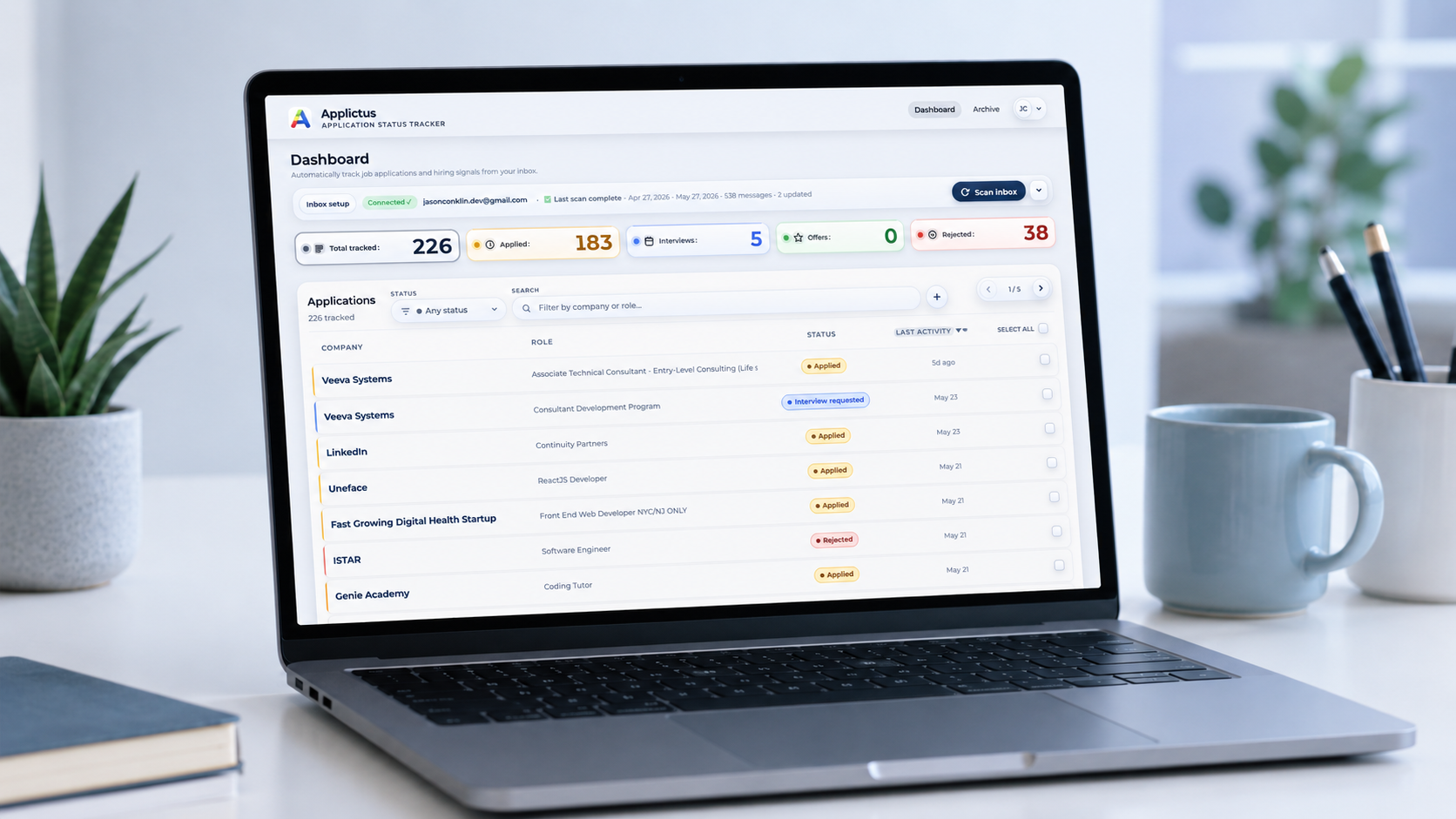
A useful tracker records more than company names. It should show the role, current status, last activity, important dates, and every hiring update that changes what you should do next.
The problem is that most tracking systems rely on manual updates. You apply for a role, get a confirmation email, receive an assessment request, schedule an interview, and then have to remember to update a spreadsheet after each step.
- Application confirmations and submitted roles
- Interview invitations, assessments, and recruiter next steps
- Offers, rejections, follow-ups, and hiring updates
- A timeline that shows the latest activity without sorting through email
How Applictus tracks applications automatically
Applictus uses an inbox-powered workflow. After setup, job-related emails are forwarded to your personal Applictus address. Applictus reads those forwarded updates, identifies the company, role, and status, then organizes them into a timeline.
This means you do not need to give Applictus full Gmail inbox access. Google sign-in is used for authentication, while tracking runs through forwarding that you control.
Why automatic tracking matters
A job search moves quickly. It is easy to miss an assessment deadline or forget which company requested an interview. Automatic tracking reduces that friction because the update is captured when the email arrives.
The result is a calmer dashboard that shows confirmations, interviews, offers, rejections, and follow-ups in one place.