
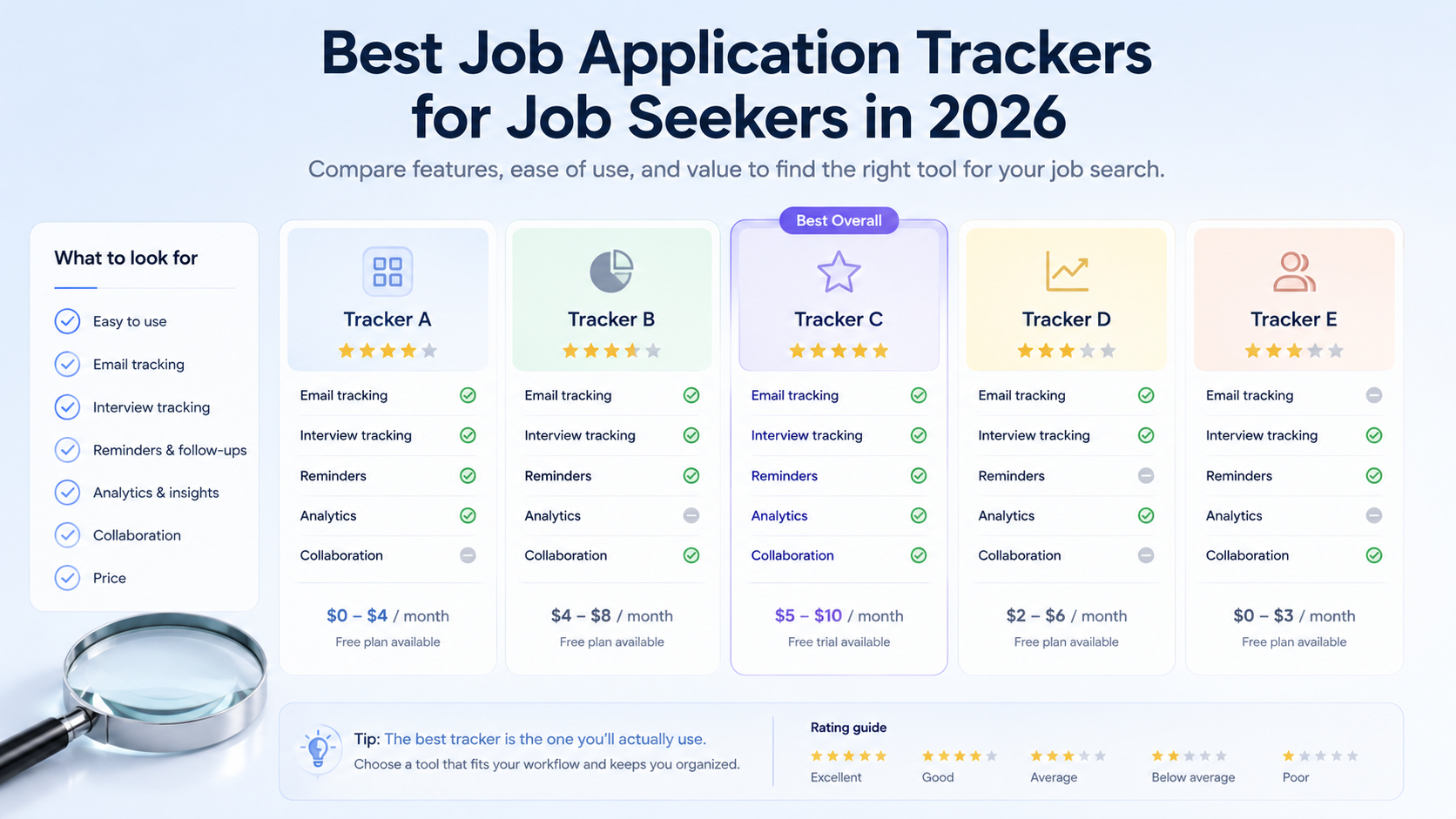
The main types of job application trackers
Most job seekers choose between spreadsheets, notes or task apps, CRM-style trackers, and automatic email-based trackers.
Each option can work, but they have different tradeoffs. Spreadsheets are flexible, task apps are familiar, and automatic trackers reduce the upkeep required to stay current.
What to look for in 2026
Modern job searches move across LinkedIn, Indeed, company portals, applicant tracking systems, recruiter emails, and calendar links. A tracker should handle that complexity without making you copy every update by hand.
Look for a tracker that captures application status, keeps interview and assessment requests visible, and helps you understand the latest activity for each role.
- Low manual data entry
- Interview and assessment tracking
- Offer and rejection status support
- Clear application timelines
- Privacy controls that match your comfort level
Where Applictus fits
Applictus is built for job seekers who want automatic tracking without granting full Gmail inbox access. You control forwarding, and Applictus turns job-related updates into organized application records.
If your job search is already happening in email, an inbox-powered tracker can be a strong alternative to maintaining a spreadsheet.